
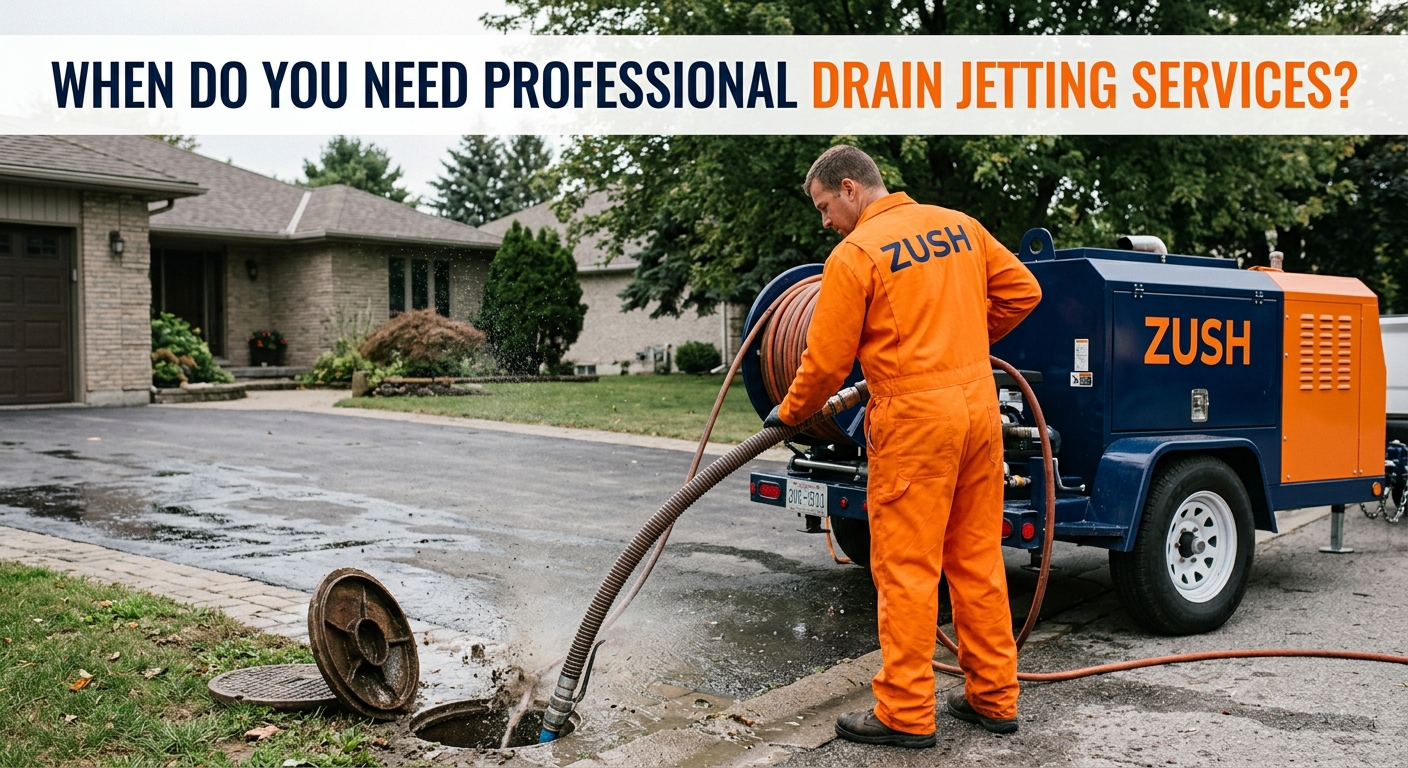
When Do You Need Professional Drain Jetting Services?
What Is Drain Jetting?
Dubai's drains work harder than most people realise. Villas in Arabian Ranches, apartments in Dubai Marina, busy restaurant kitchens in Deira and offices in Business Bay all send large volumes of water, grease, soap and waste through their pipes every day. When a drain slows down or starts to smell, the usual reaction is to reach for a bottle of something strong and hope for the best. If the problem keeps coming back, the blockage is probably not where you think it is. That is when drain jetting becomes worth considering.
Drain jetting is a professional cleaning method in which a flexible hose, fitted with a specialised nozzle, is fed into a drain line. Water is pumped through the hose at high pressure and leaves the nozzle through several small jets. Some face forwards to break up the blockage. Others face backwards to scour the pipe walls and gently pull the hose further along the line.
The force comes from a high-pressure pump built to deliver steady pressure and flow for long periods. A hydro jet drain cleaner is the complete machine: the pump, its engine or motor, a water supply, a hose reel and a selection of nozzles for different jobs.
The aim is not to blast the pipe but to clean it properly and restore its full internal diameter. This matters because most recurring blockages are not a single object. They are layers of buildup that thicken over months. In kitchens, it is usually grease and food residue. In bathrooms, it is hair and soap scum. In older properties, it can be scale, silt, and fine sand.
This guide explains how the process works, how it compares with other methods, and how to tell when a professional is the right call for your home or business.
Signs You Need Professional Drain Jetting Services
Not every slow drain needs specialist equipment. A hair clog in a shower tray can often be cleared by hand. Certain patterns, however, suggest the problem sits deeper in the system.
Repeated blockages
If the same drain blocks every few weeks, something is clinging to the pipe walls. Clearing the middle of the blockage restores flow briefly, but the buildup remains and catches new waste almost immediately. Drain jetting removes that layer so the pipe can work as it was designed to.
Slow-draining sinks and floor drains
Water that takes longer and longer to disappear usually means the pipe is narrowing. Think of it like an artery gradually silting up. By the time water stops draining altogether, the pipe may already be mostly full of deposits.
Foul smells from drains
Persistent odours from kitchen sinks, floor traps or external manholes often come from organic matter decomposing inside the pipe. Air fresheners and bleach only mask the problem. You have to physically remove the source.
Water backing up
Water rising in a shower when you flush a toilet, or gurgling sounds from several fixtures at once, point to a problem in a shared drain line. Inspect this promptly, especially in apartment buildings where one blockage can affect neighbouring units.
Grease and fat buildup
Restaurants, cafés, hotel kitchens and even busy family homes produce plenty of fats and oils. These cool inside the pipe and harden into a thick, sticky coating that ordinary tools struggle to remove.
Heavy debris inside pipes
Dubai's construction activity and sandy environment bring their own problems. Renovation work can send cement slurry, tile adhesive, and grit into drains, and fine sand gradually settles in long horizontal runs.
Blockages that return after chemical treatment
If you have already tried a product and the drain clogged again within days, that is a strong sign the buildup was never fully removed.
Commercial drainage problems
Offices, malls, hotels, labour accommodation and food outlets put constant demand on their drainage. A blocked line can mean closed kitchens, unhappy tenants and health and safety concerns, so downtime is costly.
Long or difficult-to-access drain lines
Villas often have long external runs between the house and the main connection, and large buildings have lengthy stacks and horizontal lines. Hand tools cannot reliably clean these over their full length.
Your Drain Needs More Than a Chemical Cleaner
A drain cleaner chemical can be useful for a minor, fresh clog close to the surface. Beyond that, its limitations show quickly.
Chemicals only work where they make contact. In a partially blocked pipe, the liquid often trickles past the obstruction or is diluted by standing water, so it never reaches the worst of the buildup. Solid items such as wipes, sand, cement residue, and congealed grease deposits may not dissolve at all.
Many products sold as a drain pipe cleaner are formulated for light, organic buildup near the trap. A professional drain line cleaner, by contrast, works along the whole run of the pipe, from the access point to the point where the line joins the main system.
You may need more than a chemical if:
- The drain clears briefly, then slows down again
- You have used a product more than once in a short period
- Several drains in the property are affected
- Water is standing in the pipe for long periods
- Smells persist after treatment
- The blockage is in an external or shared drain line
There is also a safety point. Strong chemicals can irritate skin and eyes, give off harsh fumes, and, if mixed with other products, create dangerous reactions. If chemical-treated water is sitting in a blocked pipe, it also becomes a hazard for whoever works on it next.
How Professional Drain Jetting Works
The process follows a clear sequence, and each stage affects the quality of the result.
- Initial inspection. The technician asks about the history of the problem, checks affected fixtures, and assesses the pipe type, access points, and likely location of the blockage.
- Identifying the blockage. Depending on the property, this may involve checking manholes, inspection chambers or using a camera to see inside the pipe. Knowing whether you are dealing with grease, debris, or damage determines the approach.
- Selecting the correct nozzle. Different nozzles do different jobs. A narrow, forward-focused nozzle suits heavy blockages, while a wider spray pattern is better for scouring pipe walls and flushing loosened material.
- Using a high-pressure pump. The hose is fed into the pipe, and the pump is brought up to a suitable working pressure. Pressure is adjusted to the pipe size, material, and condition.
- Flushing the pipe. The technician works the nozzle forwards and backwards through the problem section, flushing material towards a point where it can be cleared.
- Removing grease, sludge and debris. Loosened waste is washed out rather than left to settle further along the line, which is one reason the technique tends to last longer than quick fixes.
- Checking the drainage flow. Finally, the technician runs water through the system to confirm it drains freely and can advise on any further action needed.
Professional high-pressure drain cleaner systems differ from ordinary equipment in several ways. They offer controlled and adjustable pressure, a suitable flow rate for carrying debris away, purpose-built hoses and a wide range of nozzles. Just as important, they are operated by people who understand how pipes behave.
Drain Jetting vs Chemical Drain Cleaners
Both approaches have a place, but they solve different problems.
Chemical products are cheap, easy to buy, and sometimes effective on small, soft clogs. They can give temporary relief when a drain has only just begun to slow. The difficulty is that they generally dissolve or loosen part of a blockage rather than removing all of it. Heavy buildup, solid debris, and compacted grease tend to stay put.
Drain jetting works physically. The force and volume of water strip deposits from the pipe wall and carry them out of the system. That is why it is the better option for recurring blockages, heavy buildup, and commercial kitchens.
A fair summary is that chemicals may suit a mild, one-off slowdown, while a persistent or repeated problem usually calls for mechanical cleaning. If a chemical has not worked once, repeating it is rarely the answer.
Drain Jetting vs Traditional Drain Cleaning
Traditional methods still have their uses, and a good technician will tell you honestly which one fits.
- Plunging works on blockages close to a fixture, such as a toilet or sink, where pressure can dislodge a soft obstruction.
- Snaking or rodding uses a rotating cable or rod to break through a blockage or retrieve an object. It is useful for a single obstruction, such as a toy or a clump of hair.
- Mechanical cleaning with powered cutting heads can tackle some tougher deposits, including roots in older lines.
- Drain jetting is generally better when the issue is widespread buildup along the pipe, because the water cleans the full circumference rather than only cutting a channel through the middle.
A snake can leave a clear path while the pipe walls stay coated, which is why some blockages return soon afterwards. For a pipe with heavy grease or sludge, drain jetting is often the more thorough choice. Sometimes the best result comes from combining methods, with a technician using a cable to open the line and then jetting it clean.
Can a High-Pressure Washer Be Used for Drain Cleaning?
It is a fair question, especially as many Dubai homeowners own a high-pressure washer for cars, patios and balconies. In practice, though, these machines are designed for cleaning surfaces, not the inside of pipes.
Professional drain jetting equipment is different in several important ways:
- Pressure control. Pipes vary in material and condition. Too much pressure in the wrong place can damage joints or fragile sections.
- Nozzle selection. Drain nozzles are engineered to direct water along the pipe, with jets facing both ways. A standard washer lance is not.
- Hose design. Drain hoses are built to travel through bends and long distances.
- Flow rate. Carrying debris out of a pipe needs sufficient water volume, not just pressure.
- Safety. Water can return towards the operator through the drain opening, carrying waste and bacteria.
- Experience. Knowing how to read a blockage and when to stop is part of the skill.
For these reasons, pointing a domestic washer into a drain is not recommended. It can push the blockage deeper, spread contamination, or damage the pipe.
Why Choose Professional Drain Jetting Services in Dubai?
Property conditions in Dubai are varied. Newer towers have complex internal drainage, older villas may have long external runs, and food businesses face high grease loads. Zush provides professional drain cleaning and drain jetting services in Dubai, bringing the right equipment and expertise to handle different drainage systems and stubborn blockages effectively.
The main benefits of hiring professionals include:
- Proper equipment. Commercial-grade pumps, hoses, and nozzles matched to the pipe and the blockage.
- Experienced technicians. People who recognise the difference between a grease problem, a debris problem, and a damaged pipe.
- Faster identification of blockages. Less guesswork means less disruption.
- Thorough pipe cleaning. The whole section is cleaned, not just the point where water stopped.
- Reduced chance of recurring blockages. Removing buildup properly helps drains stay clear for longer.
- Suitable solutions for different properties. Approaches differ for a studio apartment, a family villa, a restaurant or an office block.
- Professional handling of difficult problems. Where a line is damaged or access is awkward, an experienced team can advise on next steps.
Professional drain jetting services also save time. A repeated cycle of buying products, trying tools, and calling someone out later often costs more than one proper clean.
How Often Should You Have Your Drains Professionally Cleaned?
There is no single schedule that suits every property. The right frequency depends on several factors:
- The type of property and how many people use it
- How heavily the drains are used each day
- The age and condition of the pipes
- How much grease and food waste enters the system
- Your history of previous blockages
A quiet apartment with no history of problems may need attention only when symptoms appear. A busy restaurant kitchen, on the other hand, may benefit from regular preventative cleaning to keep grease under control. Landlords and facilities managers often agree on a maintenance plan with their contractor based on how the drains actually perform.
Is Drain Jetting Safe for Drain Pipes?
When the correct pressure, nozzle, and technique are used, professional drain jetting can be suitable for many drainage systems. Modern pipes are generally designed to cope with it, and an experienced operator adjusts the settings to suit.
Caution is still needed where a pipe may be weak. Cracked, collapsed, badly corroded, or poorly jointed pipes may need inspection before any high-pressure cleaning. In those cases, a camera survey can show the condition of the line so the technician can choose the safest approach, or recommend repairs first.
When Should You Call a Professional?
Consider calling a specialist if you recognise any of these situations:
- A homeowner whose kitchen or bathroom drain keeps clogging despite repeated attempts
- A villa owner noticing water pooling near external manholes or gullies
- An apartment resident experiencing backups or gurgling in more than one fixture
- A landlord dealing with repeated tenant complaints about the same drain
- A restaurant or café with slow floor drains or a persistent smell in the kitchen
- An office or retail unit with bad odours from washrooms or pantry areas
- A building manager responsible for shared drainage lines
- Any property where a blockage returns shortly after chemical or manual clearing
Get Professional Drain Jetting Services in Dubai with Zush
Slow drains, unpleasant smells, and backed-up water are rarely problems that fix themselves. If you are dealing with recurring blockages, another bottle of chemical cleaner is unlikely to solve the underlying cause. A proper inspection will show what is happening inside the pipe, and professional drain jetting can then remove the buildup that keeps causing trouble.
At Zush, we help homeowners, landlords, restaurants, offices, and property managers across Dubai deal with blocked and slow-draining pipes. Our team inspects the problem first, explains what is causing it, and recommends the most suitable solution, whether that is drain jetting or another method.