Electrical Services for Dubai Homes
Dubai never stops growing. Towers rise, villas expand, and homes get smarter every year. Behind every light switch, air conditioner, and kitchen appliance sits an electrical system that works harder here than almost anywhere else in the world. Summer heat pushes cooling systems to their limits, humidity attacks connections, and modern lifestyles demand far more power than older wiring was designed to deliver.
When something goes wrong, the stakes are high. A flickering light may be a minor annoyance, or the first sign of a hidden fault. That is why hiring a qualified electrician is one of the smartest decisions a property owner can make. This guide explains what trained specialists do, why Dubai homes face unique challenges, and how to choose a licensed electrician you can trust.
Electrical Challenges for Dubai Homes
- Heat: With outdoor temperatures often above 40°C, air conditioners run almost nonstop. That sustained load heats cables, breakers, and distribution boards, degrading insulation and loosening terminals over time.
- Humidity and dust: Coastal moisture corrodes connections in outdoor lighting, pool equipment and rooftop installations, while fine sand creates resistance and hot spots inside panels and fittings.
- Heavy modern loads: Multiple split units, home cinemas, smart locks, induction cooktops, EV chargers and home offices can overload circuits in villas and apartments wired for a lighter era. Overloaded circuits are a leading cause of electrical fires.
- Undocumented changes: Villa extensions, majlis additions, and converted garages often involve wiring changes no one recorded. Trained professionals can trace, test, and correct them.
Electrician Responsibilities
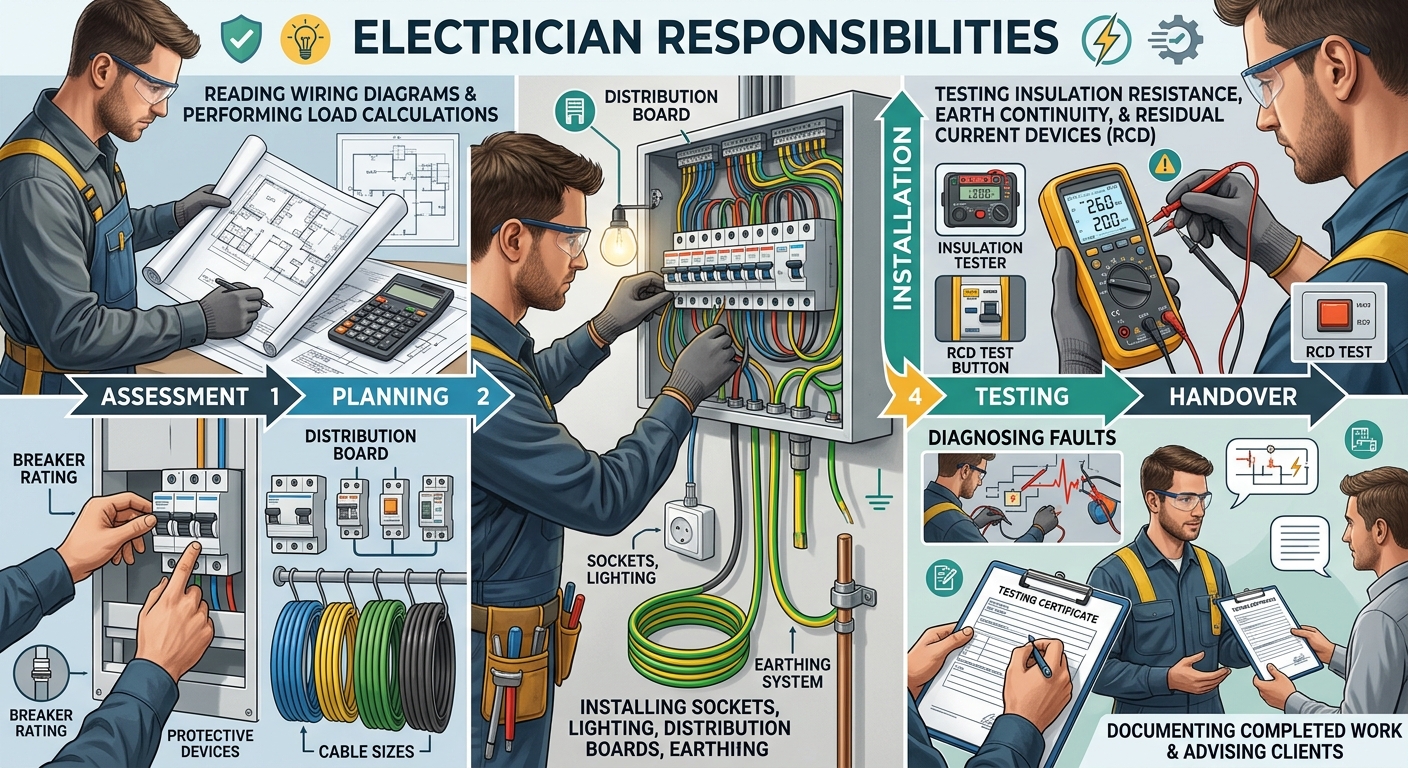
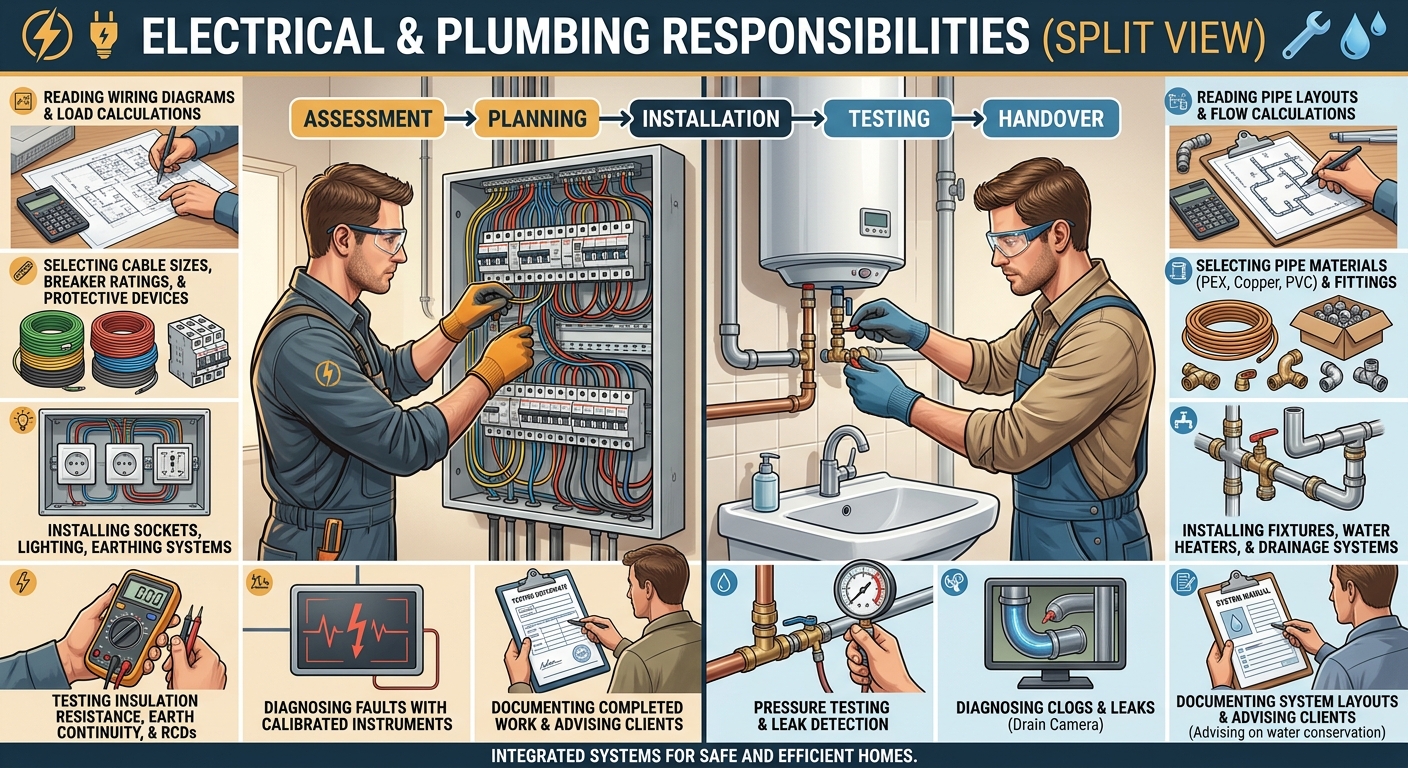
Every electrician carries serious legal and safety obligations, and the trade is far broader than most homeowners assume. A qualified professional is responsible for designing, installing, testing, and maintaining electrical systems so they remain safe, efficient, and compliant. Core duties include:
- Reading wiring diagrams and performing load calculations
- Selecting the right cable size, breaker rating and protective devices for every circuit
- Installing sockets, lighting, distribution boards and earthing systems
- Testing insulation resistance, earth continuity and residual current devices
- Diagnosing faults with calibrated instruments instead of guesswork
- Documenting completed work and advising clients on safe usage
Quality electrician work follows a clear sequence: assessment, planning, installation, testing and handover. Skipping any step leaves hidden hazards that tend to surface months later, at the most expensive moment.