Introduction
Most property owners in Dubai do not think about maintenance until something stops working. The air conditioner starts blowing warm air, a tap will not stop dripping, or a socket sparks. Then comes the scramble: searching for a technician, waiting for a slot, and paying whatever the visit costs because the problem cannot wait.
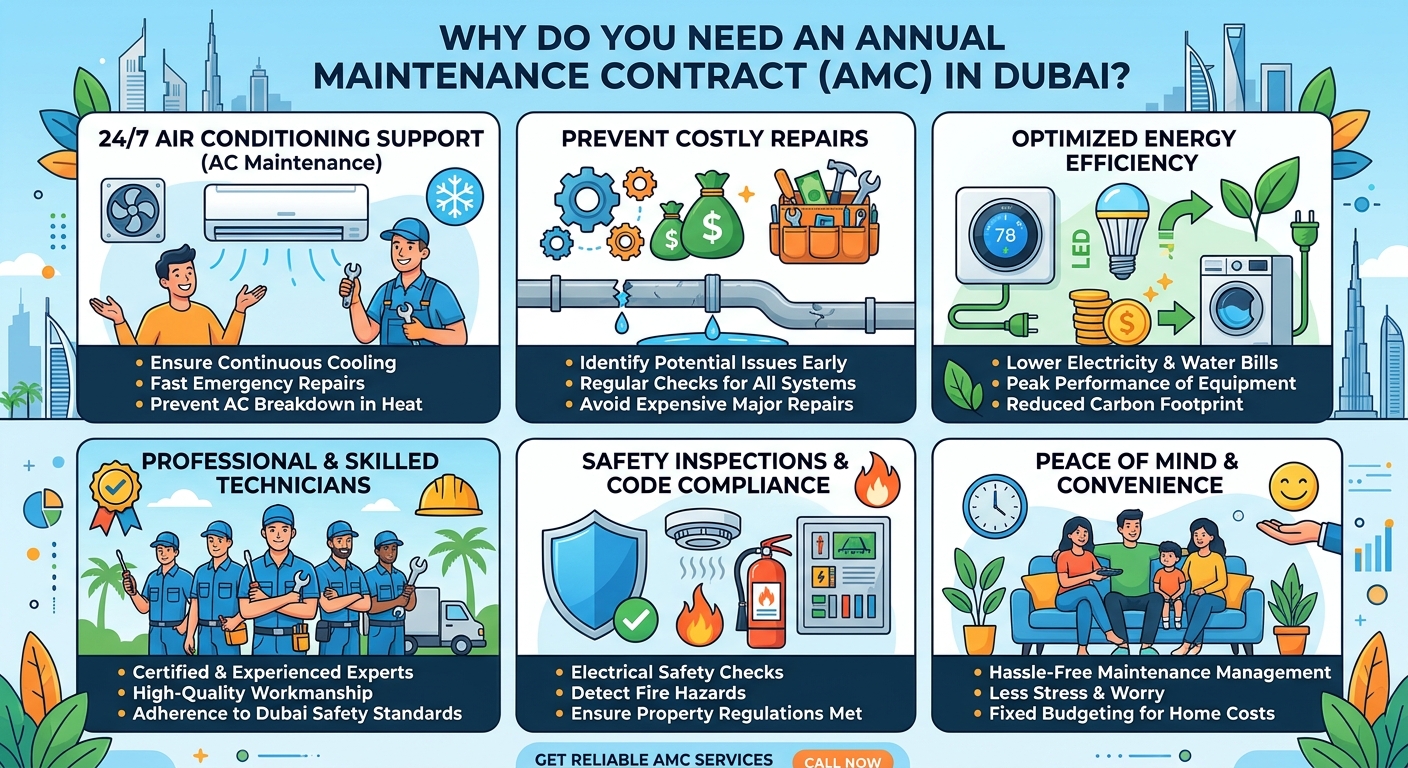
The question “why do I need an annual maintenance contract?” usually appears right after one of those moments. This article answers it honestly. We cover nine practical reasons people sign an AMC, who gains the most, when it is not worth the money, and what to ask before you commit. If you are new to the topic, think of an AMC as a yearly plan in which a service company inspects, services, and sometimes repairs your property’s systems on a set schedule for an agreed fee.
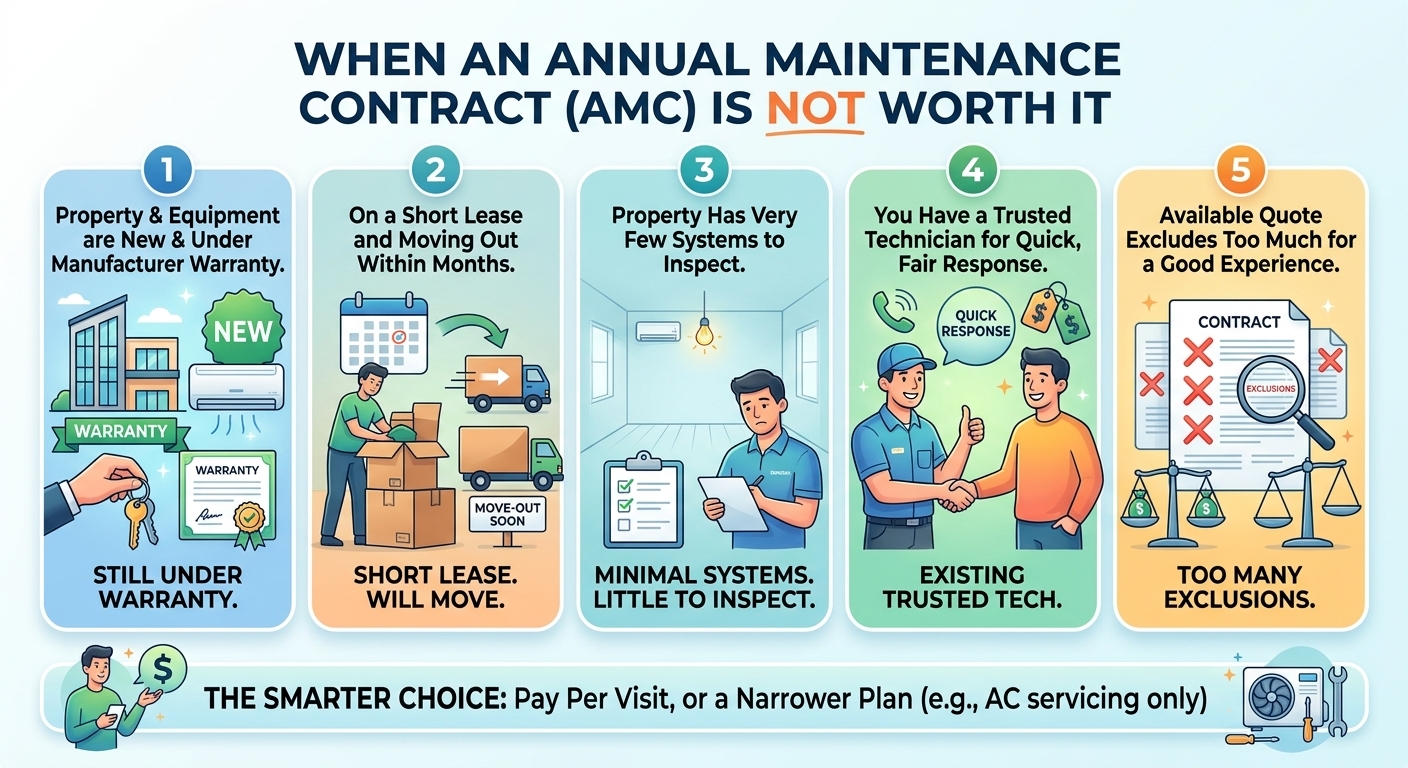
Short answer: You need an annual maintenance contract if you want maintenance to happen on a schedule instead of in a crisis, if you value a predictable yearly cost, and if you want one accountable provider with written records. You probably do not need one if your property is new, has few systems, or you will only occupy it for a short time. The rest of this guide helps you decide which group you fall into.
Dubai’s climate puts constant pressure on cooling systems
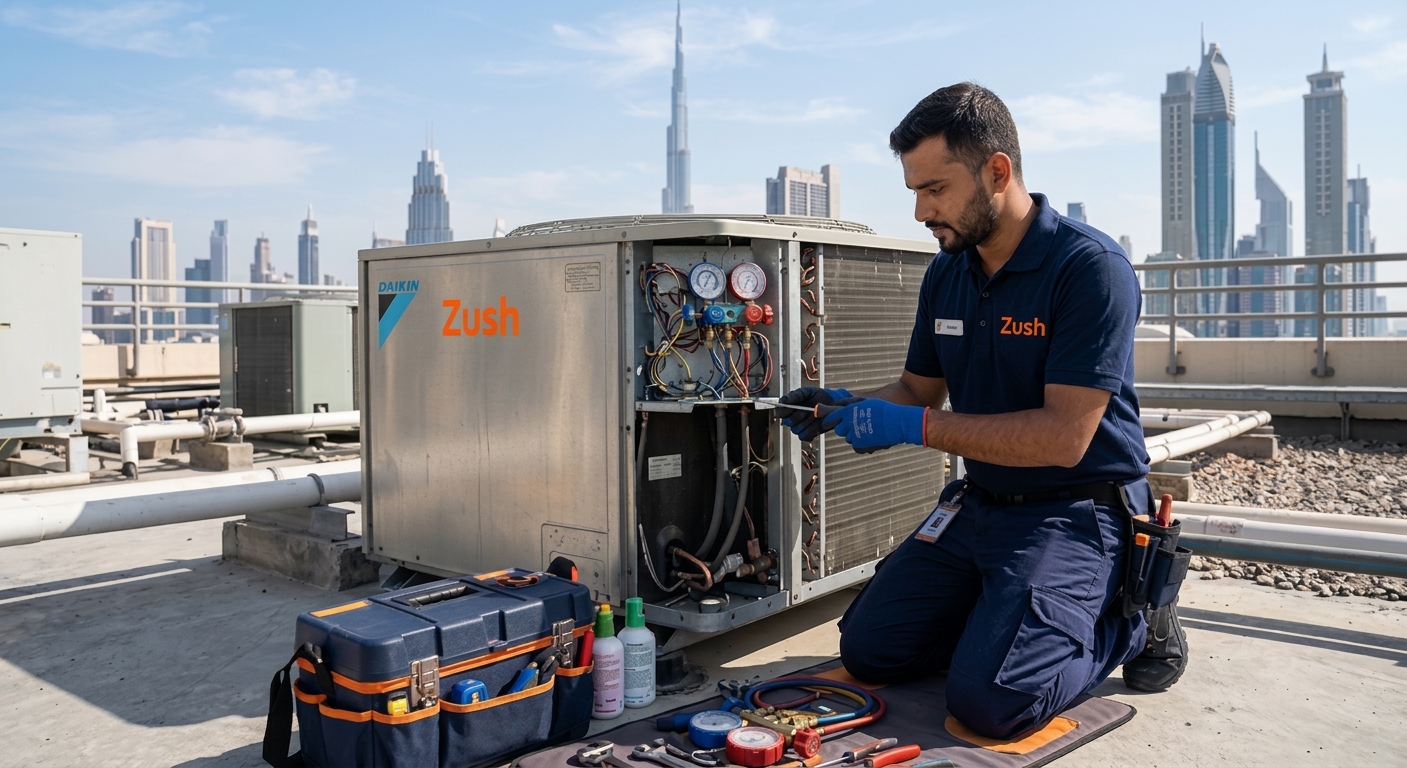
Air conditioning in Dubai is not seasonal in the way it is in many countries. Units run for long stretches of the year, collect fine dust, and deal with high humidity. Filters clog, coils get dirty, and drain lines block.
These are not dramatic failures at first. They are slow declines in performance that you may only notice when the unit struggles on the hottest day. Scheduled servicing under an AMC deals with them before that point, because a technician is already booked to clean, test, and adjust the system.
Get a predictable maintenance budget
Paying per visit feels cheaper because each bill is small. The trouble is that the bills arrive unpredictably, and emergency visits tend to be the most expensive kind. An AMC replaces that pattern with a known yearly fee, often payable upfront or in instalments.
This does not automatically mean you spend less. What you gain is certainty. Property managers and landlords, who must plan budgets for several units, often value that certainty more than a small saving.