Introduction
Every Dubai home has a heart, and it is almost always the kitchen. It is where the morning karak is brewed, where Friday brunch is assembled, and where guests end up standing, mugs in hand, no matter how beautiful your living room may be. So when the cabinets start to look tired, scratched, or stuck in another decade, the entire home feels it.
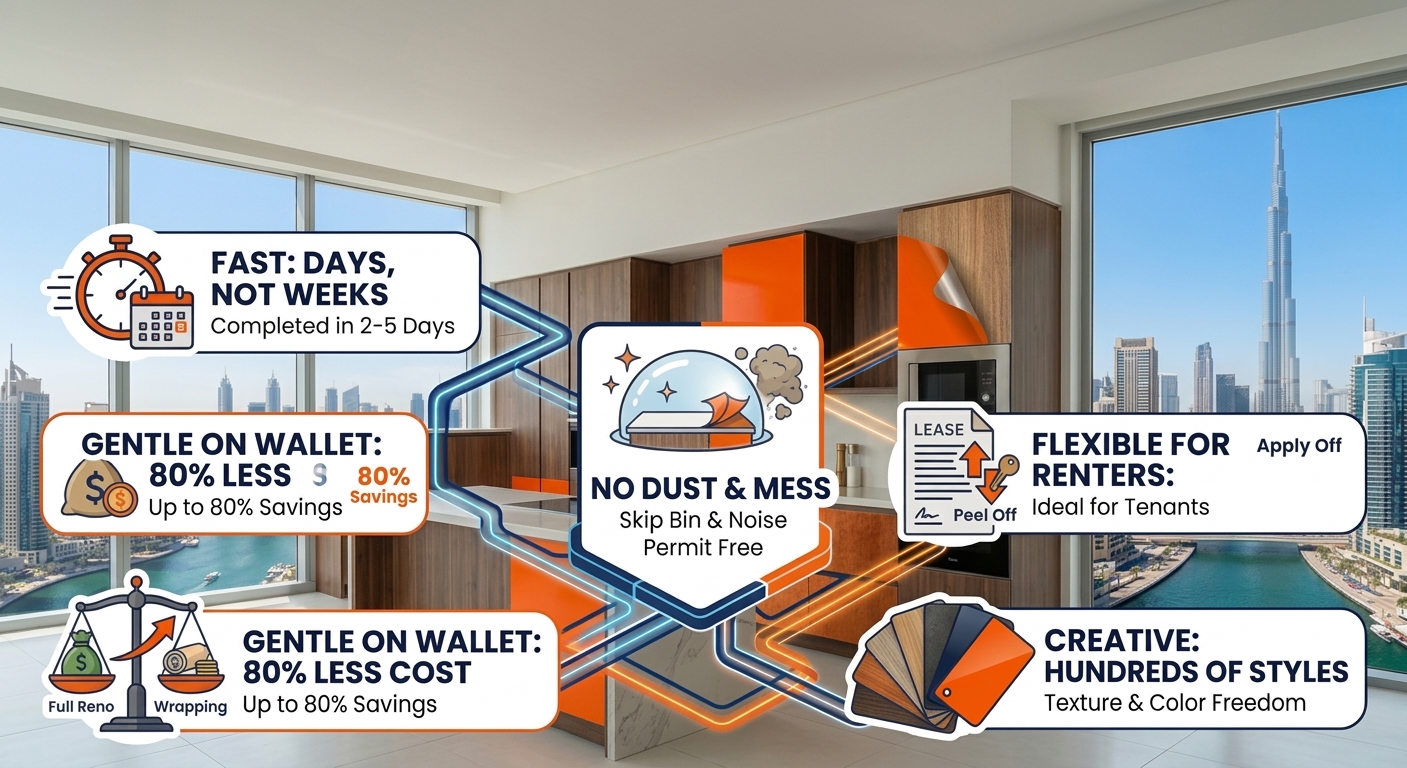
The traditional fix sounds exhausting: demolition, dust, weeks without a working sink and a bill that climbs as quickly as the skyline. The good news is that there is a smarter route. Kitchen wrapping in Dubai has become one of the most practical ways for tenants, owners and landlords to refresh a space in days rather than weeks, with nothing torn out and nothing thrown away.
This guide walks you through everything you need to know: what a kitchen wrap actually is, what it costs, how it copes with the UAE climate, which finishes are worth choosing, how the installation works, and how to pick a team you can trust. By the end, you will know whether this upgrade suits your home and exactly what to do next.
What Is Kitchen Wrapping?
Kitchen wrapping means covering the existing surfaces of your kitchen, usually cabinet doors, drawer fronts, and visible side panels, with a thin, durable architectural vinyl film. Think of it as a tailored outfit for your cabinets. The structure underneath stays exactly where it is, and only the visible skin changes. You may also hear it described as kitchen cabinet wraps or kitchen cabinet wrapping Dubai services, but all of these phrases describe the same idea.
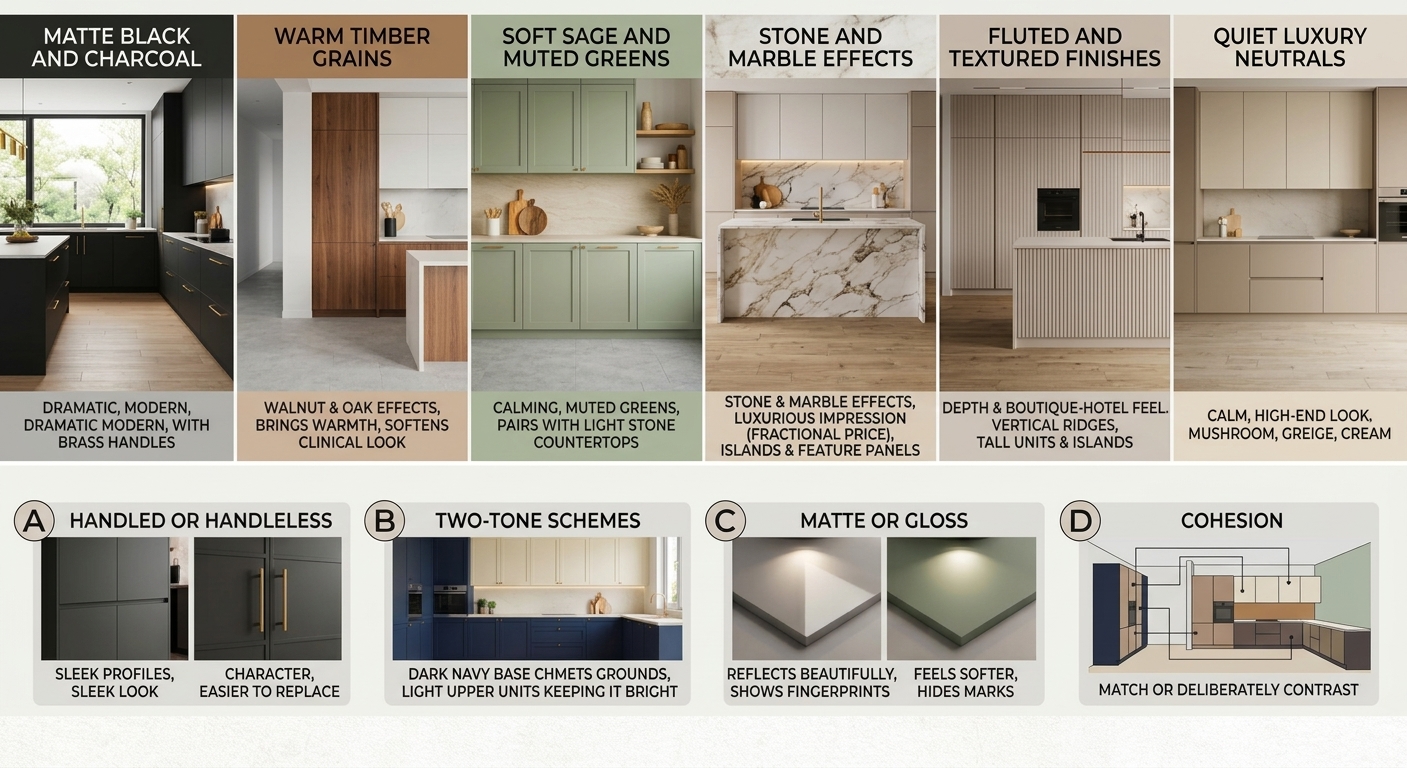
The films used by professionals are engineered products, not the sticky-back plastic you may remember covering school books. A quality film is built in layers: a decorative surface, a protective top coating, and a pressure-sensitive adhesive that bonds to the cabinet. The range of finishes is enormous, covering everything from deep matte black and warm walnut grain to marble patterns, brushed metal and soft pastel tones.
A professional kitchen wrap involves far more than peeling and sticking. The installer cleans and degreases every surface, repairs chips and dents, removes handles and hinges, heat-forms the film around edges and corners, trims it with precision, and then refits the hardware. That preparation is what separates a flawless result from a bubbly disappointment.